

Three Letters That Make a Big Difference
APR vs. APY vs. Dividend Rate: What's the Difference?
APR. APY. Dividend rate. They sound similar, and the financial industry doesn't make it easy to tell them apart. This guide breaks down what each one means, where you'll see it, and which number to pay attention to depending on what you're doing with your money.

The 30-Second Version
Not sure which number applies to your situation? Here's the cheat sheet.
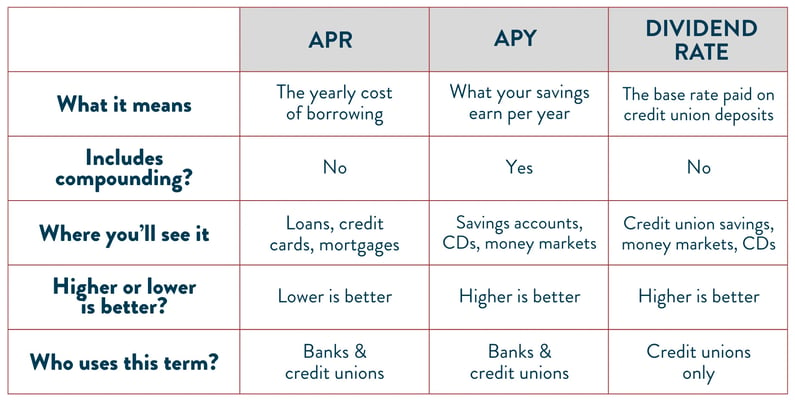
The short version: APR is what borrowing costs you. APY is what saving earns you. The dividend rate is the starting point before compounding kicks in.
What Is APR?
APR stands for Annual Percentage Rate, and it's the number that tells you the true cost of borrowing money over a year.
Here's why that matters: when you take out a loan, you're not just paying back what you borrowed. You're also paying interest, and sometimes fees on top of that. APR rolls all of that into one single percentage so you can see the full picture at a glance instead of just the interest rate the lender is advertising.
Think of APR as the honest number. It's what borrowing costs you, not just the rate on the brochure.
Where you'll see APR:
— Auto loans: the rate you'll pay on your car financing
— Mortgages: the yearly cost of your home loan, including fees
— Credit cards: the rate applied to any balance you carry month to month
— Personal loans: the cost of borrowing for things like home improvements or unexpected expenses
A few things worth knowing about APR:
It doesn't include compounding.
APR is a flat annual rate. It shows you the cost of borrowing over a year without factoring in how interest compounds over time. That's intentional, as it makes it easier to compare loans side by side.
Lower is better.
When you're borrowing, a lower APR means less money out of your pocket over the life of the loan. Even a small difference in APR can add up to hundreds (or thousands!) of dollars depending on the loan amount and term.
It's required by law to be disclosed.
Lenders are required to show you the APR before you sign anything, which makes it one of the most reliable numbers to use when shopping around and comparing offers from different lenders.
What is APY?
APY stands for Annual Percentage Yield, and it's the number that tells you how much your money earns in a deposit account over a year.
APY accounts for compounding, so it reflects not just the base rate your account earns, but also the interest that gets added on top of your interest as time goes on. That compounding effect is what makes APY the more accurate number when you're comparing savings products.
If APR tells you what borrowing costs, APY tells you what saving earns. They're two sides of the same coin, and knowing the difference helps you make better decisions on both ends.
Where you'll see APY:
— Savings accounts: the return on your everyday savings
— Money market accounts: typically a higher-yield option for larger balances
— Certificates of deposit (CDs): fixed APY for the length of your term
A few things worth knowing about APY:
It's always equal to or higher than the base rate.
Because APY factors in compounding, it will always be a slightly higher number than the stated interest or dividend rate. The more frequently interest compounds (daily, monthly, quarterly) the bigger that difference can be.
Higher is better.
When you're saving, a higher APY means more money earned over time without any extra effort on your part. It's one of the most important numbers to compare when you're shopping for a savings account or CD.
It levels the playing field.
Different accounts compound at different frequencies, making direct comparisons tricky. APY standardizes that so you can compare any two accounts, regardless of how often they compound, on equal footing.
It's also required to be disclosed.
Just like APR on loans, financial institutions are required to show you the APY on deposit accounts. It's the number to look for when you want a true apples-to-apples comparison.
What Is a Dividend Rate?
If you bank with a credit union, you've probably seen the term "dividend rate" on your account statements or product pages and wondered how it's different from a regular interest rate. The short answer: it's essentially the same thing, just with a different name.
Here's why: banks are owned by shareholders, so when they pay you for keeping money in an account, they call it interest. Credit unions like Red Rocks are owned by their members, so when they pay you for keeping money in an account, they call it a dividend. It's a reflection of the fact that as a member, you're part-owner of the institution.
The dividend rate is the base rate your credit union pays on a deposit account, before compounding is factored in. Think of it as the starting point rather than the full picture.
Where you'll see a dividend rate:
— Credit union savings accounts: the base rate on your everyday savings
— Money market accounts: the base rate on higher-yield deposit accounts
—Certificates of deposit (CDs): the base rate locked in for your term
A few things worth knowing about the dividend rate:
It doesn't tell the whole story.
The dividend rate is the starting point, as it doesn't account for compounding. That's why you'll almost always see it listed alongside an APY, which gives you the complete picture of what your money will earn.
It's credit union-specific.
You won't see dividend rate at a bank. That terminology is unique to credit unions.
APY is the more useful number for comparisons.
When you're deciding between two savings products, APY is the number that lets you compare them on equal footing. The dividend rate is useful context, but APY is the bottom line.
Which Rate Matters Most for Your Situation?
Now that you know what each term means, here's the practical part: which number should you look at depending on what you're doing with your money?
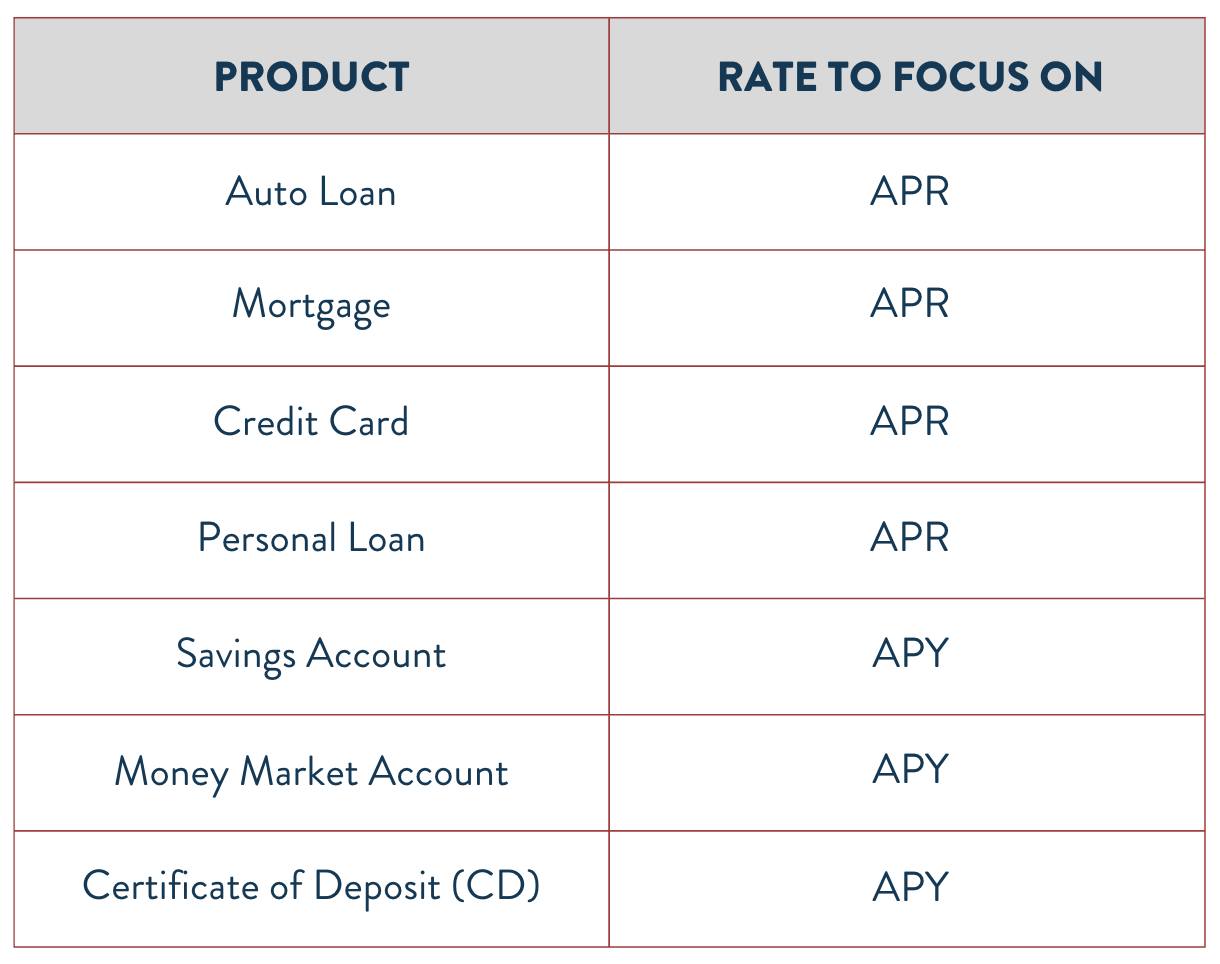
If you're borrowing, look at APR. If you're saving, look at APY. If you're at a credit union, you'll see both a dividend rate and APY on deposit accounts, but focus on APY for the most complete picture.
-2.png?width=300&name=RRCU%20Email%20+%20Blog%20Cover%20Images%20(3)-2.png)
Start Earning More Today
Understanding the difference between APR, APY, and dividend rate is one thing, but finding an account that puts those numbers to work for you is another. That's where Red Rocks Credit Union comes in.
Our Reverse Tier Savings account is a great example of APY in action. You earn up to 5.75% APY* on your first $2,000, meaning your smallest dollars earn the most. No minimum deposit, no minimum balance, and no service fees. Just a straightforward account designed to reward you for starting to save, regardless of where you are in your financial journey.
When it comes to borrowing, our team is happy to walk you through the numbers, APR included, so you know exactly what you're signing up for before you commit to anything!